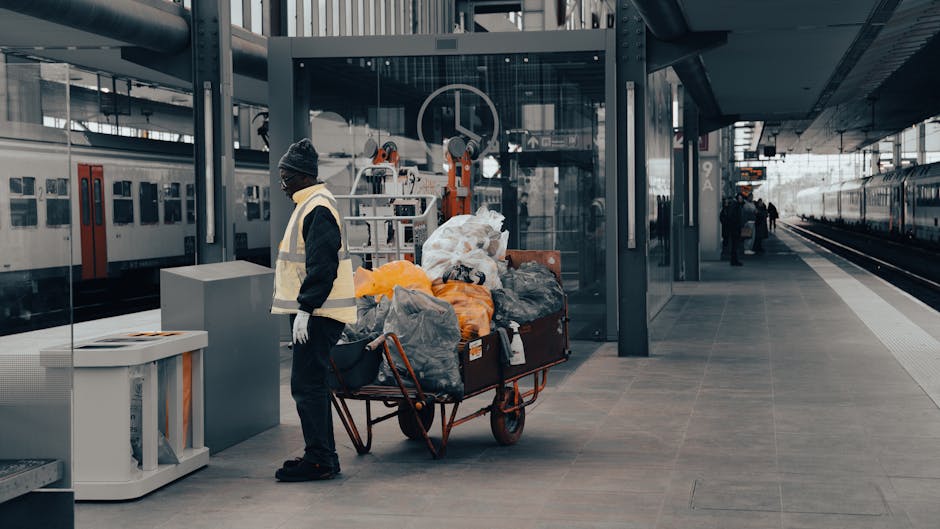
Seven Kings Station bulky waste pickup guide for commuters
If you commute through Seven Kings and keep meaning to sort out that broken chair, old suitcase, or flat-pack disaster, you are not alone. The awkward part is rarely the waste itself; it is figuring out how to move bulky items without turning your whole day upside down. This Seven Kings Station bulky waste pickup guide for commuters explains the simplest way to plan a collection around your travel routine, avoid common mistakes, and stay on the right side of local waste rules. Whether you are clearing one item or a van-load after a move, a little planning goes a long way.
In our experience, commuters want two things: speed and certainty. You want the item gone before it becomes another thing to trip over by the front door, and you want the process to fit around trains, work shifts, and the usual London rush. Fair enough.
Table of Contents
- Why Seven Kings Station bulky waste pickup guide for commuters Matters
- How Seven Kings Station bulky waste pickup guide for commuters Works
- Key Benefits and Practical Advantages
- Who This Is For and When It Makes Sense
- Step-by-Step Guidance
- Expert Tips for Better Results
- Common Mistakes to Avoid
- Tools, Resources and Recommendations
- Law, Compliance, Standards, or Best Practice
- Options, Methods, or Comparison Table
- Case Study or Real-World Example
- Practical Checklist
- Conclusion
- Frequently Asked Questions
Why Seven Kings Station bulky waste pickup guide for commuters Matters
Seven Kings Station sits in a busy commuter corridor, which means people often leave home early, get back late, and do not have much room for faffing about with old furniture, broken appliances, or garden waste. That makes bulky waste a very practical problem, not just a household one. If you miss the right collection window, the item can sit there for weeks, getting in the way every time you pass it. And let's face it, nobody wants to drag a wardrobe down the stairs at 6:45 a.m. before a train.
A solid pickup plan matters because bulky waste is awkward in three ways: it takes space, it is hard to carry, and it often needs special handling. Commuters are usually balancing that with limited time, shared hallways, parking restrictions, and neighbours who really do not want a sofa blocking the pavement. A clear plan reduces stress and makes the whole job feel manageable.
It also helps you decide whether a simple pickup is enough or whether a fuller waste removal service is the smarter choice. That distinction matters when the pile has quietly grown from "just one broken item" to a small mountain of stuff you no longer recognise.
How Seven Kings Station bulky waste pickup guide for commuters Works
At a practical level, bulky waste pickup is about matching the collection method to your schedule and the type of item you need removed. For commuters, the best approach is usually one that lets you prepare the waste in advance, confirm the pickup time clearly, and avoid being stuck at home for half a day waiting for someone to arrive.
The process usually follows a simple rhythm:
- You identify what needs to go and separate bulky items from general rubbish.
- You check access: front garden, hallway, stairs, lift, or shared entrance.
- You choose a pickup option that fits the volume and the timing.
- You make sure the items are reachable and safe to move.
- The collection happens, and the waste is taken for appropriate sorting, reuse, or disposal.
For commuters, timing is the main variable. A collection before work can be perfect if the items are already outside or in a ground-floor space. An evening pickup may suit people who finish late, but only if access is easy and neighbours will not be disturbed. The key is to avoid relying on vague arrangements. Specific beats hopeful every time.
If you are clearing bulky items from a flat, you may also want to look at the practicalities of a flat clearance approach, especially where stairs, shared entrances, and limited storage space are involved.
Key Benefits and Practical Advantages
The biggest benefit is obvious: you get your space back. But there is more to it than that. A well-planned bulky waste pickup can save you time, prevent injuries, and stop items from sitting around becoming another weekend chore you keep avoiding.
- Less stress around commuting: you can work the pickup around your normal travel pattern instead of taking a full day off.
- Safer handling: bulky items are more likely to cause knocks, slips, or back strain if you try to move them last minute.
- Cleaner shared spaces: hallways and entrances stay clearer, which matters in flats and terraced homes.
- Better organisation: once the old item is gone, it is easier to assess what else genuinely needs keeping.
- More efficient disposal: suitable items may be separated for reuse, recycling, or specialist handling.
There is also a small but real mental benefit. One large broken item can create a strange sort of visual noise in a home; you keep seeing it, keep stepping round it, and keep feeling that the place is not quite sorted. Removing it often feels like a reset. A bit dramatic maybe, but true.
For larger home projects, many people find it helpful to combine bulky waste with broader home clearance planning, because then you are dealing with the clutter in one sweep rather than in ten separate mini-jobs.
Who This Is For and When It Makes Sense
This guide is especially useful if you commute through Seven Kings Station and your daily routine leaves limited room for household admin. That includes office workers, shift workers, students, parents juggling school runs, and anyone living in a flat or shared property where bulky waste cannot just sit outside indefinitely.
It makes sense in situations like these:
- You have a sofa, mattress, or wardrobe that is no longer usable.
- You are moving out and need bulky items cleared before handover.
- You have ordered a replacement item and need the old one removed first.
- You are clearing a loft, garage, or spare room after months of delay.
- You cannot transport large items yourself because of size, weight, or access issues.
If you work from home some days and commute on others, you may have a little flexibility - which is useful. Book the collection for the day you are already out, or for a morning when someone else can supervise access. Small coordination wins like that make the whole process feel smoother.
It may also be relevant if you are dealing with office furniture or equipment at home. In that case, an office clearance service can be a better fit than trying to treat everything as ordinary household waste.
Step-by-Step Guidance
Here is a straightforward way to handle bulky waste pickup without overcomplicating it. Honestly, this is one of those jobs that gets easier the moment you stop trying to solve it all in your head.
1. List the items you want removed
Write down each item and note whether it is furniture, garden waste, electrical equipment, or mixed household junk. A clear list helps avoid last-minute surprises. That old chest of drawers in the spare room? Include it. The broken office chair with one wheel missing? Absolutely include it.
2. Check access before the collection day
Ask yourself: can the item be carried straight out, or does it need to go through narrow halls, stairs, or a lift? Access is often the thing that slows everything down. If the item is in a rear garden or on an upper floor, mention that early so the collection can be planned properly.
3. Separate bulky items from general waste
Do not mix loose rubbish, bags of waste, and large furniture unless the provider has said that is fine. Separation makes the pickup faster and easier to handle. It also helps with sorting later, which matters for recycling and disposal.
4. Take care with awkward or hazardous contents
Check drawers, cupboards, and storage boxes before moving anything. You would be surprised how often chargers, batteries, personal papers, and random tools end up inside furniture. It is a small step, but one that prevents headaches later.
5. Prepare the items for easy collection
If possible, place items in an accessible spot the evening before or on the morning of pickup. Keep the route clear of shoes, prams, bikes, and bags. If a collection crew can get in and out quickly, your whole day runs better. Less waiting, less noise, less fuss.
6. Confirm what happens after collection
Ask how items will be handled once collected. Some may be suitable for reuse or recycling, while others will need disposal. If environmental handling matters to you - and it should - ask about the provider's recycling approach. The recycling and sustainability information is a useful place to understand the general approach.
Expert Tips for Better Results
Here are the little things that make a bulky waste pickup much easier. These are not flashy tips, just the sort of detail that saves time on the day.
- Book with a realistic buffer: if you have a train to catch, do not schedule the pickup right on the edge of departure time.
- Measure awkward items: long wardrobes, headboards, and exercise equipment can be harder to move than they look.
- Group items by room: it helps you see the true volume and avoids forgetting one awkward item in the hallway.
- Photograph the waste in advance: useful for quoting and for avoiding misunderstandings about volume.
- Keep paths clear: stairwells and entrances are not the place for a surprise pile of plant pots or old boxes.
One small expert habit: keep a "to go" corner in advance. Even a single chair and a few boxes in one place make collection day far less chaotic. You do not need a perfect system. Just enough order to stop the morning turning into a scramble.
Practical summary: the best bulky waste pickup for commuters is the one that is easy to access, easy to schedule, and clear about what will be removed. If the plan feels fuzzy, tidy it up before booking. Fuzzy plans tend to become annoying plans.
If you are clearing a garage, the same thinking applies. A dedicated garage clearance can be a smart way to remove larger stored items without dragging the job out across several weekends.
Common Mistakes to Avoid
The most common mistake is leaving everything until the last minute. That tends to create avoidable stress, especially if you commute early and return late. Another frequent issue is underestimating the size or weight of the item. A bulky waste pickup sounds simple until you realise the wardrobe will not fit through the landing turn without careful handling.
- Not checking access: stairs, lifts, parking, and entry codes matter more than people expect.
- Forgetting to empty items: drawers, cupboards, and hidden compartments often contain personal or valuable things.
- Mixing waste types: keeping furniture, builder debris, and general rubbish separate avoids confusion.
- Assuming every item is accepted: some waste streams need special treatment.
- Booking too close to travel times: commuter life is busy enough already.
There is also a simple human mistake: assuming someone else will "just know" what you mean. They will not. Be specific. It saves everyone a bit of awkwardness.
Tools, Resources and Recommendations
You do not need specialist equipment for every pickup, but a few ordinary tools make life easier. A tape measure helps with large items. Strong gloves protect hands when moving rough timber or broken furniture. A torch can help in lofts, under-stair cupboards, and dim hallways. Nothing glamorous, but useful.
It can also help to think about the type of clearance you actually need. For example, if the item is an unwanted sofa or table, furniture clearance may be the right service style. If the furniture is broken and headed straight for disposal, furniture disposal may be more appropriate. That distinction is small, but it can help you describe the job accurately.
For slightly larger or more mixed jobs, a broader waste removal service can be the simplest route, especially when you are dealing with more than one bulky item and do not want to split the job up.
If you are exploring pricing, it is sensible to review the available pricing and quotes information and compare how the job is assessed. Volume, item type, access, and handling time can all affect the final quote. That is normal.
Law, Compliance, Standards, or Best Practice
Bulky waste pickup is not just a convenience issue. In the UK, waste needs to be handled responsibly, and anyone arranging removal should be careful about who is taking it away and where it is going. You do not need to become a compliance expert, but it is sensible to use a provider that treats waste handling, safety, and traceability seriously.
Best practice usually includes:
- clear description of the waste being removed;
- safe lifting and moving practices;
- appropriate handling of reusable, recyclable, or disposal-only items;
- respect for access routes and neighbouring properties;
- transparent communication about what is included.
For customers, the main practical point is simple: be honest about the items and do not leave the provider guessing. If something is unusually heavy, damaged, or awkward, say so. That helps the collection run safely and avoids delays. Safety first, as the saying goes - though in a stairwell with a bulky wardrobe, it is also just common sense.
Where safety and insurance matter, it is worth reviewing the company's health and safety policy and insurance and safety information before you book. A trustworthy provider should be happy for you to understand how they work.
Options, Methods, or Comparison Table
There is more than one way to handle bulky waste near Seven Kings Station. The best method depends on how much time you have, what you are disposing of, and whether you need a one-off pickup or something more comprehensive.
| Option | Best for | Pros | Trade-offs |
|---|---|---|---|
| One-off bulky waste pickup | A few large items | Quick, simple, easy to schedule around commuting | May not suit mixed or high-volume loads |
| Furniture-focused collection | Sofas, tables, wardrobes, beds | Good for item-specific jobs, straightforward planning | Less ideal for mixed household clutter |
| Full waste removal | Mixed bulky and general waste | More flexible, useful for bigger clear-outs | Needs clearer briefing and more preparation |
| Room or property clearance | Flats, homes, offices, garages, lofts | Best for larger projects and major decluttering | Usually requires more time and coordination |
If your project is not just one item but a bigger clear-out, that comparison should help. A small sofa replacement? One-off pickup. A whole spare room being emptied after years of "I'll sort it later"? You are probably in clearance territory.
Case Study or Real-World Example
A commuter living near Seven Kings Station had an old wardrobe, a broken desk chair, and two bags of mixed storage clutter that had been sitting in a bedroom corner for months. The problem was not the items themselves. It was the timing. Early trains made morning collections tricky, and evenings were already full.
Instead of trying to deal with everything on the fly, the items were grouped the night before, the hallway was cleared, and measurements were checked so the wardrobe could be moved safely. The collection was set for a day when the person was working from home for a few hours, not all day - a small but important difference. The result was calm, quick, and oddly satisfying. No stairwell drama, no last-minute rummaging for keys, no "where did the screws from this desk go?" moment.
That kind of simple planning is the real lesson. You do not need a perfect system. You just need a sensible one that fits commuter life.
Practical Checklist
Use this checklist before booking or on the day of pickup. It keeps things tidy and stops the obvious mistakes from sneaking in.
- List every bulky item you want removed.
- Check whether items are furniture, mixed waste, or something more specific.
- Measure large items and note access issues.
- Empty drawers, cupboards, and hidden compartments.
- Clear hallways, doorways, and stair routes.
- Confirm whether the pickup needs street access or front-door access.
- Keep personal documents, chargers, and valuables separate.
- Review pricing, payment, and booking details in advance through payment and security information.
- Check what will happen to reusable or recyclable items.
- Make sure the pickup time fits your commute, not the other way around.
That last one matters more than it sounds. A collection that fits your life is the difference between "sorted" and "stressful".
Conclusion
For commuters near Seven Kings Station, bulky waste pickup is really about convenience, timing, and good planning. Once you know what needs removing, how it will be accessed, and which service style fits the job, the whole process becomes much easier. The goal is not just to get rid of an old item. It is to do it in a way that respects your schedule, your home, and your energy.
Whether you are clearing one awkward piece of furniture or coordinating a bigger household job, the smartest move is to prepare early and choose a service that handles bulky waste responsibly. If you want a service that feels straightforward from the start, begin with clear information and a simple quote request. It really does save time later.
Get a free quote today and see how much you can save.
Frequently Asked Questions
What counts as bulky waste near Seven Kings Station?
Bulky waste usually means items that are too large or awkward for normal household bins, such as sofas, beds, wardrobes, tables, and similar large household items. If you have to wrestle with it to move it, it probably counts.
Can I arrange a bulky waste pickup around my commute?
Yes, that is the whole point for many commuters. The key is to choose a time when access is clear and the items are already ready to go, so you are not trying to haul things about while checking the clock every thirty seconds.
Is a furniture collection better than general waste removal?
If you only have furniture to remove, a furniture-focused option can be cleaner and simpler. If you have mixed clutter as well, broader waste removal is usually the more practical choice.
Do I need to be at home for the pickup?
It depends on access and the collection setup. Some pickups can be arranged with clear instructions if items are already in an accessible place. For flats or gated entry, it is often easier if someone is available.
How should I prepare items before collection?
Empty them, check for personal belongings, and place them where they can be collected safely. A quick tidy-up of the access route can make a bigger difference than people expect.
What if my bulky items are in a flat with stairs?
Then access needs to be planned carefully. Mention stairs, narrow landings, lifts, and any parking restrictions early. That avoids awkward surprises on the day.
Can bulky waste pickups handle mixed household clutter?
Often yes, but it depends on the provider and the kind of waste involved. If you have a mix of furniture, boxes, and other items, describe the full load clearly before booking.
Is it better to book a home clearance instead?
If you are clearing several rooms or a large volume of items, a broader home clearance may be the better fit. For just one or two bulky items, a simpler pickup is usually enough.
How do I know if a quote is fair?
A fair quote should reflect item size, access difficulty, volume, and handling time. If a job is straightforward, the quote should feel proportionate; if access is difficult, a higher quote may be reasonable.
What happens to the items after pickup?
That depends on the item and the service, but the general expectation is that items are sorted for reuse, recycling, or disposal where appropriate. It is sensible to ask about this before booking if sustainability matters to you.
Can I combine bulky waste with garden or garage items?
Yes, if the provider accepts mixed loads. In that case, a garden clearance or garage clearance style job may be more suitable than a single-item pickup.
What should I do if I am not sure whether an item is accepted?
Ask before booking. It is always easier to clarify in advance than to discover on collection day that the item needs a different handling method.
If you are still weighing up the best option, take ten minutes to list your items properly and decide whether you need a single pickup or a broader clearance. That small pause can save a lot of running around later, and honestly, that is a pretty good trade.